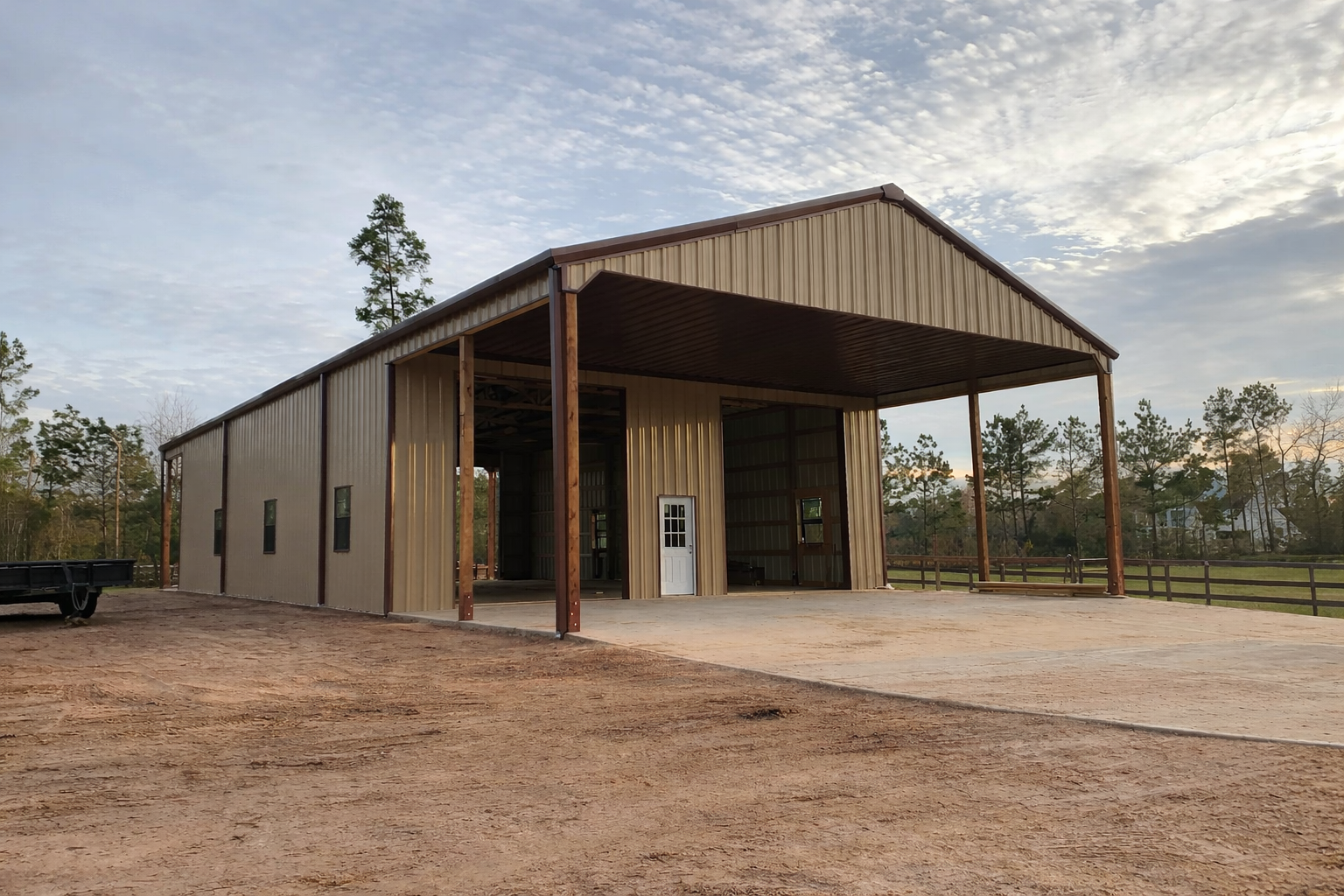
Building a horse barn is more than putting up walls and stalls. A well-designed barn protects your horses, supports daily routines, and lasts for decades without constant fixes. Many barn issues come from missing small but critical features that affect safety, comfort, and efficiency.
Whether you’re planning your first barn or upgrading an existing one, knowing what truly matters can save time, money, and stress. This guide walks through the essential features every horse barn should include to support healthy horses and smooth daily operations.
Proper Stall Design for Horse Comfort
Stalls are where horses spend a large portion of their time, so size and layout matter. A cramped stall can cause stress, poor movement, and even injury over time. Most adult horses need stalls that allow them to turn, lie down, and stand comfortably without obstruction.
Doors should open smoothly and be wide enough for safe handling. Rounded edges, solid materials, and secure latches reduce injury risk and make daily use easier. Good stall design balances strength with comfort, ensuring the space feels calm rather than confined.
Ventilation That Keeps Air Fresh Year-Round
Fresh airflow is one of the most overlooked barn features, yet it plays a major role in horse health. Without proper ventilation, moisture and ammonia from bedding can build up quickly. A well-ventilated barn helps regulate temperature, reduce odors, and lower respiratory issues.
Natural airflow through ridge vents, side openings, and high ceilings works best. Mechanical fans can help, but they should never replace proper structural ventilation. Good airflow keeps barns cooler in summer and drier in winter without creating harsh drafts.
Safe Flooring and Effective Drainage
Barn flooring must handle weight, moisture, and daily cleaning without becoming slippery or uneven. Poor flooring increases the risk of joint strain, hoof issues, and falls.
A solid base with proper drainage allows water and urine to move away from stalls instead of pooling. Mats can add comfort, but they should sit on a stable surface underneath. Walkways should stay dry and level to make movement safer for both horses and handlers.
Lighting That Supports Daily Routines
Good lighting improves visibility, safety, and overall barn usability. Dim barns make routine tasks harder and increase accident risk. Natural light through windows or translucent panels helps create a calm environment.
Artificial lighting should be evenly distributed, bright enough for grooming and cleaning, and protected from moisture and impact. Well-planned lighting also supports early mornings and late evenings without disturbing the horses.
Storage Space That Keeps the Barn Organized
A cluttered barn creates safety hazards and slows daily work. Dedicated storage areas keep feed, tack, tools, and bedding off the floor and out of stalls.
Feed rooms should stay dry and secure to protect supplies from pests and moisture. Tack areas benefit from ventilation and spacing to prevent mold and wear. Organized storage saves time and keeps everything within easy reach.
Durable Materials Built for Long-Term Use
Horse barns face constant wear from animals, equipment, and weather. Materials should be strong enough to handle impact, moisture, and daily cleaning without frequent repairs.
Pressure-treated lumber, steel components, and quality fasteners increase durability. Surfaces should be easy to clean and resistant to rot or corrosion. Choosing the right materials up front reduces long-term maintenance costs.
Essential Safety Features Every Barn Needs
Safety should be built into the structure, not added later. Fire prevention, clear exits, and strong construction all matter.
A well-planned barn includes:
- Wide aisles for safe movement
- Clearly marked exits for emergencies
- Fire-resistant materials where possible
- Secure electrical wiring protected from moisture
- Smooth surfaces without sharp edges
These features protect horses, handlers, and the structure itself.
Room to Adapt as Needs Change
Horse ownership often evolves. You may add more animals, equipment, or new uses over time. A flexible barn layout allows for future adjustments without major reconstruction. Expandable designs, extra space in aisles, and adaptable stall layouts make it easier to grow or repurpose areas later. Planning avoids costly changes down the road.
Easy Access for Daily Work and Equipment
A barn should support efficient movement, not slow it down. Door placement, aisle width, and access points affect how smoothly chores get done.
Drive-through access, equipment clearance, and logical flow between areas reduce effort and improve safety. Small design choices can make daily routines far more manageable.
Conclusion
A great horse barn combines comfort, safety, and durability into one well-planned structure. From ventilation and flooring to storage and layout, each feature plays a role in protecting your horses and supporting long-term use.
When every essential element is considered from the start, the result is a barn that works as hard as you do. For expert planning and construction tailored to your land and needs, trust Danielson Construction to build a horse barn that lasts.