
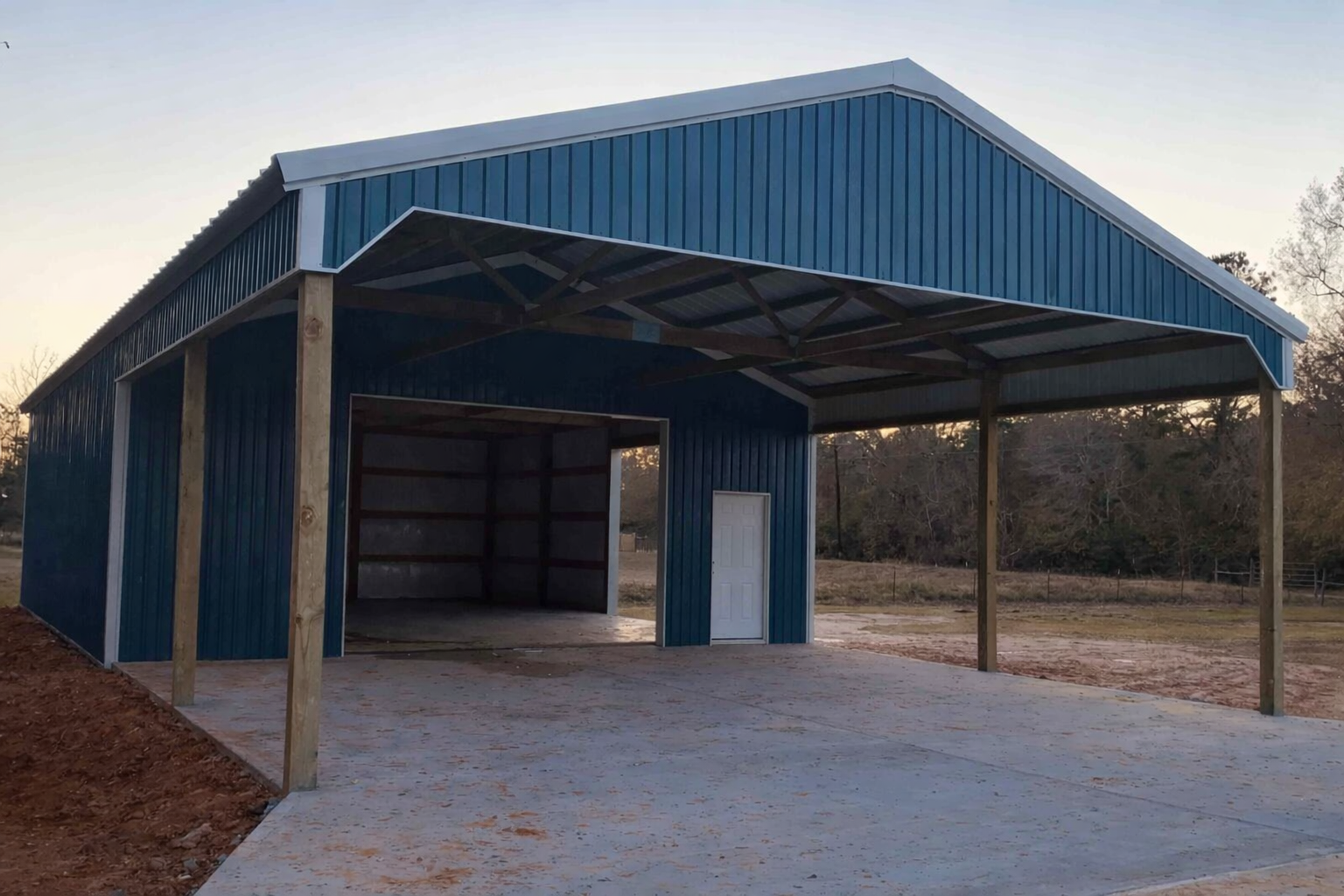
Choosing between a detached and an attached garage is more than a design preference. It affects how your property flows, how you approach storage and workshops, and even how your house performs in rain, heat, or resale markets.
The best option balances your current needs, the shape and size of your lot, local code constraints, and plans. Below are the main factors to weigh so you can make an informed decision.
How Does Your Lot Size & Shape Matter?
The physical layout of your property often decides the winner. An attached garage typically tucks under the same roofline as your home and uses the existing driveway efficiently for small to medium lots. If you have a narrow lot or limited side-yard access, an attached garage usually fits better.
A detached garage needs more space and clear access. It can sit at the back of the lot or alongside the house, but you’ll need to consider circulation, setbacks, and the visual impact from the street. On large or irregular lots, a detached building offers flexibility in placement and can create a separate work or hobby area without affecting the main house layout.
Cost and Construction Complexity
Attached garages commonly cost less per square foot because they share walls, HVAC extensions, and rooflines with the house. Foundation work and utility runs can be simpler, and building permits may be more straightforward when the structure ties into the existing footprint.
Detached garages often cost more because they require a separate foundation, independent roofing, and separate utility hookups (if you want power, heat, or water). However, detached garages can be phased in later. They are useful if you want a smaller initial budget and plan to add the structure later when funds permit.
Garage Use Case
Think about how you’ll use the space. If your primary need is car parking and easy access to the house, an attached garage is more convenient, especially in bad weather. If you want a loud workshop, a woodworking shop, or a space that could convert into a studio or accessory dwelling unit (ADU), a detached garage separates noise, fumes, and dust from living areas.
A detached garage can also create privacy or a separate entry for a rental unit, and it gives more flexibility to incorporate higher ceilings or large garage doors for RVs and equipment.
Resale Value and Curb Appeal Considerations
Both attached and detached garages can add resale value, but location and finish quality matter. An attached garage that blends with the home’s architecture usually appeals to buyers who prioritize convenience. A well-designed detached garage can be a selling point if it fits the property, offers a finished workspace, or supports ADU conversion.
Curb appeal is subjective. On a tight urban lot, a visible detached garage may feel out of place. On a larger rural lot, a detached shop can add character. Think about what typical buyers in your neighborhood expect.
Permits, Setbacks, & Neighborhood Rules
Local building codes determine setbacks, maximum lot coverage, and sometimes garage orientation. Homeowner association rules may require certain materials or color palettes. Always check zoning and permit requirements before you design. Anything that looks fine on paper can hit a permitting wall and force redesigns.
Also consider drainage and stormwater. A detached structure placed downhill of the house could create runoff issues. Proper grading and foundation design avoid these problems.
Utilities, Comfort, and Security
Attached garages are easier to heat or cool from the home and can share wiring or mechanical systems. But they also create a thermal and fire interface with the house, planning for insulation, proper doors, and fire-rated walls is critical.
Detached garages require separate utility runs if you want power, lighting, or HVAC, and you’ll want secure pathways between buildings. Lighting, security cameras, and covered walkways increase usability in bad weather.
Practical checklist
- Measure your lot: Driveway access, Setbacks, and Overhead clearances.
- List uses: Parking, Storage, Workshop, ADU potential, or Hobby space.
- Budget plan: Initial build vs. Phased construction and Long-term maintenance.
- Code check: Consult zoning, Setbacks, and HOA rules early.
- Utility needs: Power, Water, Heating, and Internet for the garage.
- Resale goal: Match neighborhood expectations or create a unique selling point.
- Drainage & foundation: Plan grading and slab for the intended use.
Example Scenarios to Help Decide Quickly
- Small suburban lot, bad weather commute, and family-focused lifestyle → Attached (best for convenience).
- Large rural property, needs a shop and space for equipment or ADU → Detached (best for flexibility).
- Desire to phase projects due to budget constraints → Build attached now, add a detached shop later, or vice versa, depending on access.
- Neighborhood where buyers expect detached carriage houses or shops → consider detached for resale advantage.
Conclusion
There’s no one-size-fits-all answer. The right garage depends on lot geometry, how you’ll use the space, budget, timing, and local code. Start with a site review, list your primary uses, and talk with a builder who can translate preferences into a buildable plan. For a customized plan that fits your land and long-term goals, contact Danielson Construction to discuss your options and get a site-specific recommendation.